Lioness Sunkuroi and her family rest on a termite mound near Lion Guardians Camp.
Game Changers: How Lion Guardians Are Solving How Humans and Lions Coexist
In the Amboseli-Tsavo region of Kenya, a dry, sweeping landscape where local Maasai communities depend on herding cattle and other livestock for their livelihood, living alongside lions has never been simple. As the human population expands, lions are pushed out of their natural range and end up closer to people more often than before — and when they prey on livestock for food, conflict follows. Culture plays a role too: for generations, a young Maasai warrior proved his passage into manhood by killing a lion. Combined, these pressures were costing lives on both sides, human and lion.
When they began their work in Kenya, Dr. Stephanie Dolrenry and Dr. Leela Hazzah recognised an opportunity: no one was better positioned to protect lions than the Maasai, given their tracking skills and deep knowledge of the bush. Drawing on these indigenous skills and cultural values, Hazzah and Dolrenry launched Lion Guardians in 2007. The program recruits young Maasai warriors to track and monitor lion populations, pairing their traditional expertise with tools like drones, GPS units and radio telemetry, so their communities can coexist with lions more safely. The result has been a genuine transformation—men once responsible for killing lions are now responsible for protecting them. And lion numbers in the region have grown by more than seven-fold since the program began.
Chantecaille has been a proud supporter of Lion Guardians since 2014. This fall, with the debut of our Lion Collection, we’re honoured to continue that partnership as the organisation celebrates 20 years in the field. We recently spoke with Stephanie Dolrenry to talk about the impact Lion Guardians has had, how the programme has changed since its earliest days, and why she believes that being a woman gave her and her co-founder a distinct edge in finding solutions others hadn’t considered.
Q: Can you share Lion Guardian's mission and how it has evolved over two decades?
The official mission of Lion Guardians is to promote sustainable coexistence between people and lions by combining rigorous science with indigenous cultural values and community participation. In the early years, the focus was immediate and urgent: preventing every single hunt and saving every lion, because so few remained. Today, the lion population has stabilised, the culture has evolved, and Lion Guardians has evolved with it. Coexistence is at the heart of the work—that means strengthening community and livestock protection, reducing negative interactions between people and lions. In recent years, we have also placed greater emphasis on supporting local leadership and enabling Maasai communities to take ownership of the programme, so that it is truly led by and rooted in the community it serves.
Q: Why is Amboseli, where Lion Guardians is based, such a vital habitat for lions?
East Africa is one of the few places in the world where megafauna — including African elephants, and large carnivores such as lions, spotted hyenas, and leopards — continue to live alongside people in shared landscapes. With few fences, free-range livestock, and wildlife moving across community lands, this is one of the world’s last great examples of true coexistence. At the heart of this landscape lies the greater Amboseli ecosystem, stretching from the Chyulu Hills to Tsavo East and West and across the Kenya-Tanzania border to Mount Kilimanjaro. Amboseli National Park itself is relatively small. The majority of wildlife spends much of its time on the surrounding community lands, where Maasai pastoralists have lived alongside wildlife for generations. While stories of lion killings often make headlines, they tell only a small part of a much larger story. The reality is that the Maasai are among the world's greatest conservationists. Without their tolerance and stewardship, this extraordinary wildlife population simply could not persist. Every day, people share their land with lions, elephants, hyenas, leopards and countless other species while continuing to raise their families and livestock. For many people in the United States, having a snake for a neighbour can feel challenging. Here in Maasailand, families share space with lions, hyenas, pythons, and elephants, the overwhelming majority of the time harmoniously, making this landscape one of the most remarkable examples of human-wildlife coexistence anywhere.
capo

Lelinka keeps watch while his companion rests during a pause in their mating period.
Q: Can you explain how you harnessed the Maasai tradition of killing lions to reinforce a culture of protection?
At its core, Maasai culture is oriented towards conservation as it is rooted in stewardship of the land and deep knowledge of wildlife. Lions have been revered for their courage, strength, and resilience. Traditionally, when a murran [a young Maasai male warrior] killed a lion for olamayio [a rite of passage into manhood], he earned a lion name and the respect of his community—having demonstrated the same qualities admired in the lion itself. When Lion Guardians was founded, we recognised the power of those cultural values and reimagined how they could be expressed in a changing world. The skills remained the same: tracking lions, reading the landscape, understanding animal behaviour and demonstrating courage. But instead of hunting lions with spears, the warriors became the protectors. These are their lions to protect, and their bravery was measured not by the lions they killed, but by the lions they protected while still safeguarding their communities and livestock. This is what it means to be a Lion Guardian.
Over time, the communities themselves have driven this transformation. Women in particular have played an important role in reshaping what earns respect and status. While lion hunting was once associated with bravery, today’s communities increasingly value actions that strengthen family and livelihoods. Protecting lions does not diminish courage—it channels it into safeguarding livestock, supporting coexistence, and creating stable employment. Many Guardians have now served their communities for two decades, providing reliable income while conserving one of the world’s most iconic species. The core values have never changed. Courage, leadership, bravery, and the intimate knowledge of the bush have always defined a great warrior, and today, those same qualities define a great Lion Guardian.
Q: Could you have foreseen such a cultural shift when you conceived this model?
Not completely. From the beginning, we believed that conservation had to work with the local culture, not against it. We never wanted to arrive and tell people how they should live simply because we had scientific training or university degrees. Instead, we had enormous respect for the Maasai communities, culture, and their knowledge of the lions and the environment. Our approach was to listen first. We continually asked what was culturally appropriate, and adapted in small ways, along the way—which meant it was built with the community and thus was embraced and sustained by the community. At the start, we simply hoped we could save a few lions. We even believed that if we failed, we'd have at least documented the end of this lion population—because it is worth trying. As the programme grew, something remarkable happened: the communities themselves drove its growth and evolution. Whenever new challenges arose, we turned to the Guardians and asked: “What would the Maasai do traditionally? How would your culture approach this?” Time and again, they had thoughtful and practical solutions that strengthened the programme. I never imagined it would become as successful as it has.

Lion Guardians conduct a night patrol in search of the collared lioness Mirurai, helping guide her away from nearby livestock enclosures.
Q: You're arguably better listeners because you're women!
I think being women certainly helped. As women, we weren't threatening and that created space for honest conversations. Maasai society is traditionally patriarchal and because we are neither Maasai women nor men, we occupied a somewhat unique position. The warriors felt comfortable speaking openly with us – sharing stories about the lions they'd hunted, why they hunted them, and showing us where the lions were in the bush. They didn’t see us as there to judge or challenge them. But just as important was how we approached those conversations We listened with genuine curiosity and respect. We weren’t there to tell people they were wrong or to impose solutions. We wanted to understand their perspectives, their culture, and their relationship with lions. That trust became the foundation of everything that followed.
Q: You’re celebrating 20 years of Lion Guardians. How do you sum up the positive impact you've had?
To me, it all comes down to hope. We’ve seen the lion density increase by seven-fold. The Amboseli ecosystem has become a source population, with dispersing lions moving across southern Kenya and northern Tanzania—that is an extraordinary change and metric of success from where we were 20 years ago. And the human story is just as important. The greatest change has been in community tolerance. Twenty years ago, if lions killed livestock, people often responded by organising a lion hunt immediately. Today, livestock losses still happen, and people understandably become frustrated and angry. But far more often, communities choose to work with us rather than to seek retaliation. When we first started, I used to say that if we could reach 2 to 3 lions per 100 square kilometers that would be an incredible success. To now have over 7 per 100 sq km is beyond anything we imagined. Perhaps the biggest lesson of all is that conservation doesn’t happen through one dramatic moment. It happens one step at a time one lion at a time, one warrior at a time, one family at a time, and one community at a time. That is how lasting change is built and that’s where hope comes from.
Q: As Lion Guardians has grown and changed, the various roles that the Maasai community plays in the organization have also grown and changed, with members employed at all levels and functions. Can you share more on this?
From the beginning, building local leadership was always the vision. In the early years, educational opportunities in many of the communities where we worked were limited. Some of the Guardians were learning how to write or how to hold a pencil for the first time, while other who had completed school were learning to use a computer for the first time. We invested heavily in literacy, computer skills, leadership and technical training. Over the years, that investment has grown into something much bigger. The people we trained have one on to mentor and train the next generation of Guardians, creating a cycle of knowledge that continues today. We still provide literacy and computer training, but today our team also includes Maasai conservation leaders who have earned Master’s degrees. We have Kenyan team members pursuing PhDs and team members that have studied at universities including Oxford, Cape Town, and Kent. Seeing community members grow into scientists, managers, and leaders has been one of the most rewarding parts of this journey. That progression was always our goal. Lion Guardians was never intended to be a project run for communities—it was meant to be a programme led and owned by the communities.
Even the language we use reflects that philosophy. In the early days, someone might say, “Your lion ate my livestock!" We would gently respond: "They're your lions. They live on your land.” That simple shift in language reinforces something fundamental: these are not someone else’s lions to manage. They belong to this landscape, and the future of both lions and people depends on local communities leading their conservation.

Male lion Martii relaxes in the evening light on community lands.
Q: And you and Leela have stepped aside to allow for community leadership.
Yes, absolutely. That was always the vision. Today, Lion Guardians is led by Maasai and Kenyan conservationists. Leela and I continue to serve as directors, but our role is to support the team rather than lead it. From the beginning, we never wanted to create an organisation that depended on its founders. Success meant building something that could keep growing, blooming, changing for generations to come.
Q: Let's talk about the technologies that have helped realize these results, which our Lion Collection will support. How does “Individual Identification” work and how does it protect both lions and people?
When I first came to Kenya, monitoring lions was largely based on radio collaring. If a lion wore a collar, you knew who it was. Those methods are valuable, but they're invasive [to the lion] and only provide detailed information on a relatively small number of animals. Our goal has always been to improve lions’ lives, not simply study them. In the late 1970s, researchers discovered that every lion has a unique whisker-spot patterns —much like human fingerprints —that remain unchanged throughout its life. By the mid-2000s, researchers in the Serengeti were systematically using whisker patterns for individual identification of lions, and we adopted this approach early on in Lion Guardians. It has allowed us to recognise every lion as an individual without ever needing to collar it and it applicable for the whole population of lions.
This approach also resonated culturally as the Maasai have a long tradition of naming their livestock, with each animal known for its own personality and characteristic. Before Lion Guardians, a lion researcher who collared lions named them Amber, Birdie, Charlie, Doug, and Eddie. Those names had little meaning to the warriors and their communities. As the warriors became more involved in the work, they gave each lion a Maa name that reflected its appearance, behaviour, or personality. Suddenly, these weren't anonymous predators—they were known individuals with stories. An example of this is Lomunyak, who was a gorgeous black-maned male who had killed quite a number of cattle during his reign and had been hunted several times, but each time he had escaped unscathed and thus the warriors gave him the name “Lucky” (Lomunyak in Maa).
Individual IDs completely changed how we understood conflict. We discovered that not all lions behave the same way. In fact, around 19% of the population accounts for more than 80% of the livestock depredations. These are considered “chronic” livestock raiders; they repeatedly target bomas [fenced enclosures] year-round, while other lions are only occasionally involved in conflict —for example, first-time lactating mothers (I understood this after I had my daughter: you're hungry, exhausted, give me a goat!), or young dispersing males going through an adventurous adolescent phase before settling into adulthood.
Knowing which individual you're dealing with allows us to respond far more effectively. Instead of treating every lion as a problem, we can focus interventions where they're actually needed, while allowing the vast majority of lions to continue behaving naturally.
Perhaps the biggest surprise, though, was how individual identification could change a community’s tolerance. When you know an individual's story, you have so much more empathy. Scientists are often taught not to anthropomorphise, but we have found anthropomorphising an individual lion’s story can be one of the most powerful tools for coexistence. When a community knows, "This is a young mother raising her first litter and doesn't quite know what she's doing," people usually respond with very differently. The lion becomes a unique individual rather than simply a threat. The understanding often creates empathy, patience and ultimately greater tolerance.
The technology supporting our work has also advanced dramatically. Lions are naturally elusive, particularly on community lands, but today we combine individual identification with drones, GPS technology, and cloud-based data systems that allow teams across the globe to share information in real time. Drones help us locate lions more efficiently, respond rapidly to conflict, and even safely move lions away from livestock bomas at night so families—and their livestock—can sleep safely. These tools reduce livestock losses, improve lion survival, and strengthen coexistence.
One particularly memorable example involved a very young cub that became separated from its mother and siblings. Working with our conservation partners, using drones together with our knowledge of the individual lions involved, we were able to locate the mother and siblings and ensure the small cub was reunited with them—something that would have been nearly impossible just a few years ago. Moments like that remind us that technology is most powerful when it is backed by culture, science and Indigenous knowledge, and empathy.
Q: And how will this work on a larger scale?
On a larger scale, individual identification allows us to follow lions across enormous landscapes. It’s how we know lions are moving between Amboseli and Tsavo National Parks, and even as far as Nairobi National Park. By recognising the same individuals as they move through different areas, we have seen that what might appear to be separate lion populations are actually part of one large, interconnected metapopulation. That has profound implications for conservation.
Protected areas are simply not large enough to sustain these wildlife populations on their own. Lions and other wildlife depend on the pastoral lands between them to move, disperse, and maintain connectivity across landscapes. So, ultimately, the future of wildlife truly is in the hands of the communities. If protected areas and the surrounding rangelands remain as part of a connected system, and people continue to tolerate wildlife living alongside them, then these extraordinary creatures can continue to thrive—for our great-grandchildren to marvel at.

Shop This Story

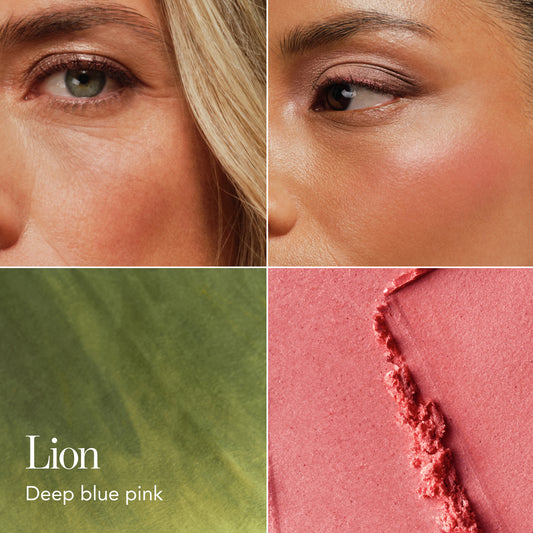
Lion Collection Cheek Shade

Lion Collection Luminescent Eye Shade

Lip Veil - Lion Collection

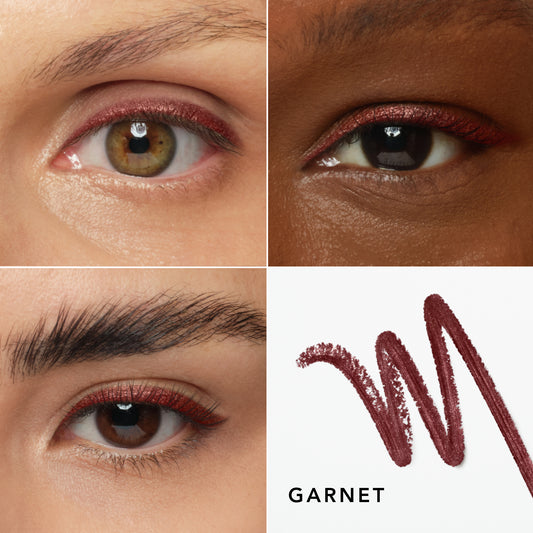
Lion Collection Luster Glide Eye Liner

Lion Collection Matte Eye Shade

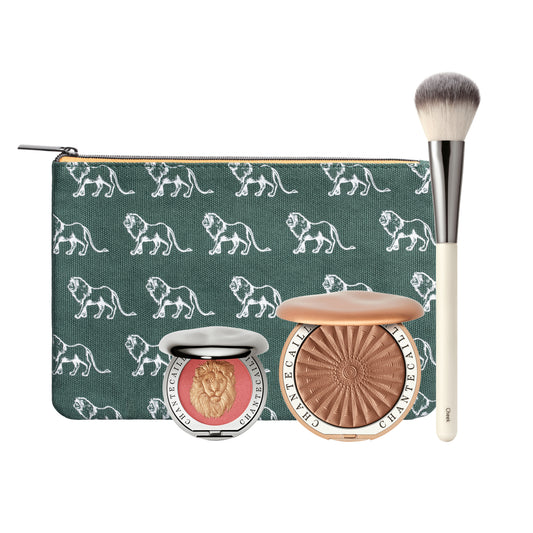
Savannah Glow

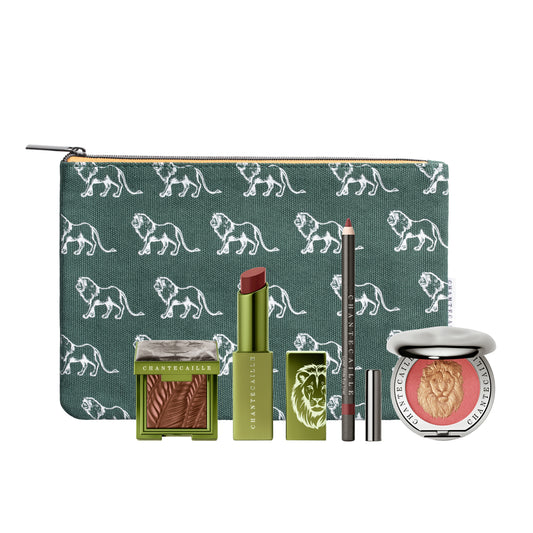
Full Pride Edit

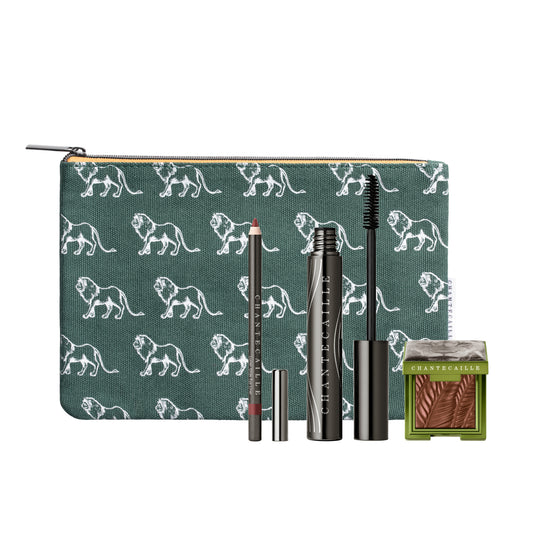
Fierce Eyes Edit

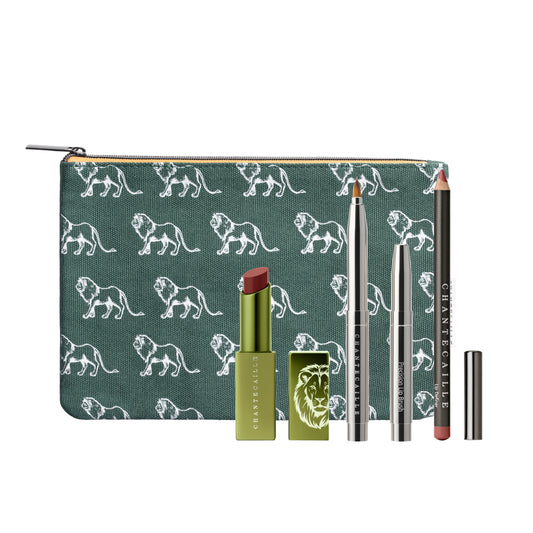
Lioness Roar

Ultra Sun Protection SPF 45 PA++


Future Skin Gel Foundation


Just Skin Tinted Moisturizer SPF 15

Bio Lifting Concealer

Real Bronze


Faux Cils Longest Lash Mascara


Blend and Smooth Brush
Angled foundation brush
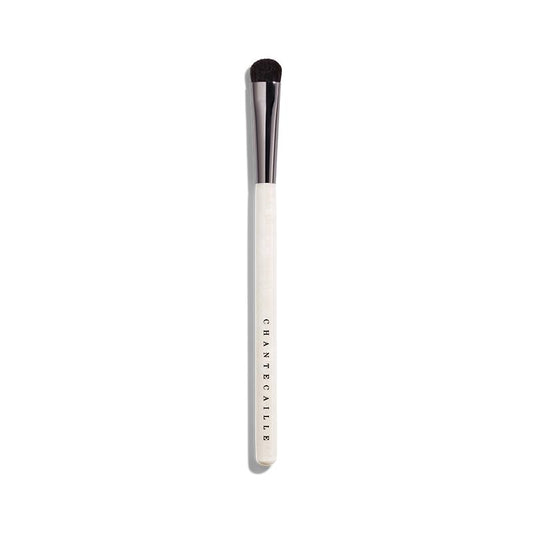
Eye Blend Brush


Sculpt Contour Brush
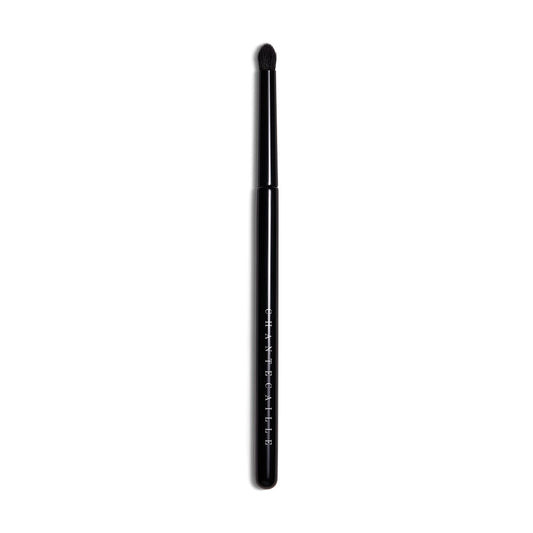
Precision Blend Brush
A finely pointed soft-bristle vegan brush for precision application.

Eye Basic Brush

Cheek Brush

Eye Definer Brush


Precision Lip Brush
Retractable lip brush

Eye Liner Pencil Sharpener